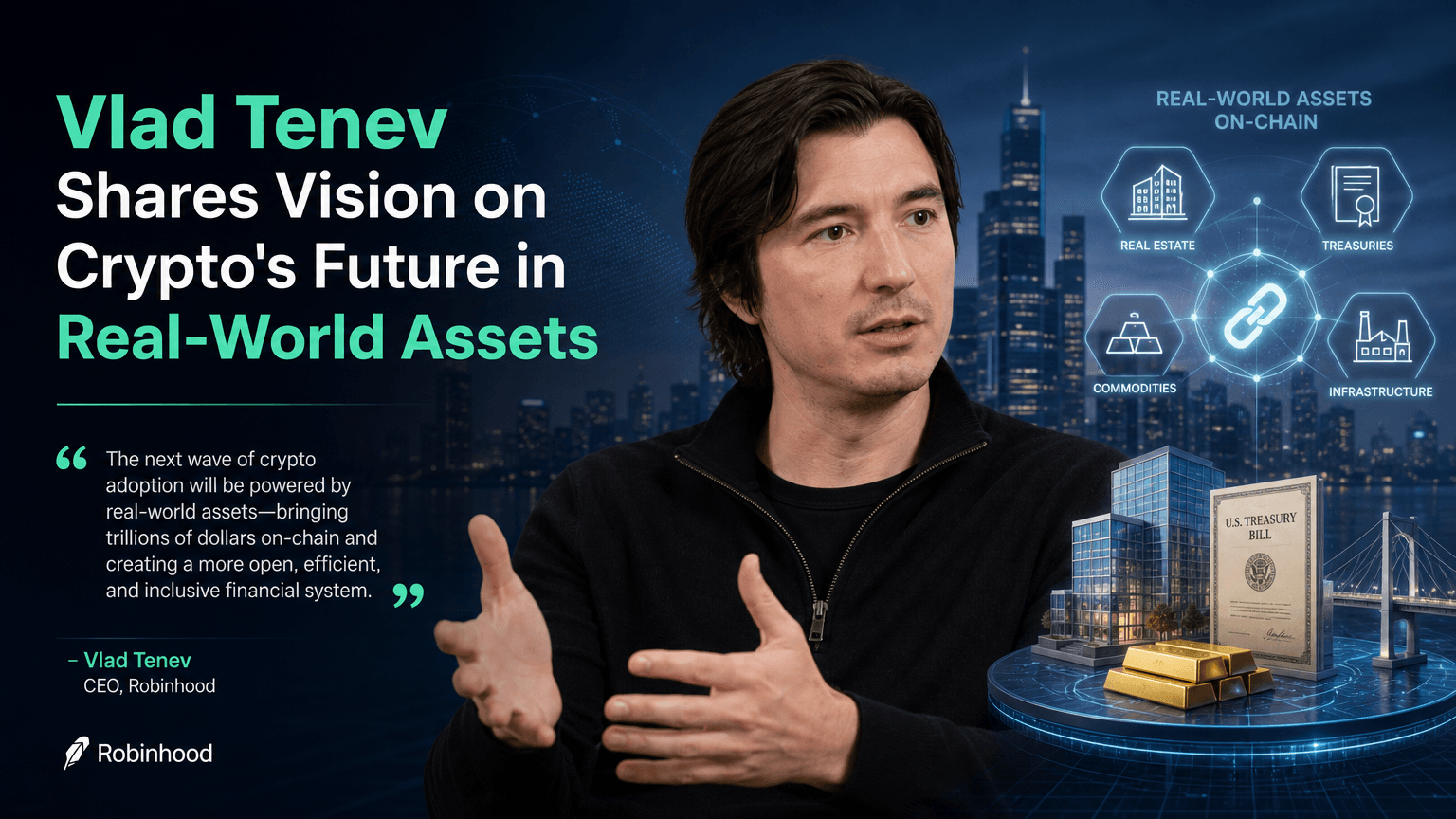
Vlad Tenev Shares Vision on Crypto's Future in Real-World Assets
Shifting Perspectives in the Crypto Space: The Role of Real-World Assets
The cryptocurrency market is a dynamic and ever-evolving landscape, often characterized by its rapid developments and the diverse range of opinions from influential figures within the industry. Recently, Vlad Tenev, co-founder of the popular trading platform Robinhood, has brought renewed focus to a vital topic with significant implications for the future of cryptocurrencies: the integration of real-world assets.
Vlad Tenev's Vision for the Future of Cryptocurrency
On July 8, 2026, Vlad Tenev shared his perspective in a tweet that has since ignited a robust discussion across the crypto community. His statement that "the future of cryptocurrency lies in real-world assets" underscores a critical shift toward practical applications and stronger ties between digital currencies and tangible values. Given the track record of Robinhood as a democratized trading platform that has enabled countless individuals to engage with financial markets, Tenev's insights carry considerable weight and influence.
Current Trends and Market Sentiment
The crypto market is currently experiencing a phase of mixed signals, with individual assets displaying varied momentum and price movements. This volatility is not unusual for cryptocurrencies, known for their fluid market dynamics and numerous external influences. However, Tenev's emphasis on real-world asset integration resonates at a moment when investors are increasingly seeking more stability and security in their digital holdings.
The Growing Relevance of Real-World Assets in Cryptocurrency
The concept of merging cryptocurrencies with real-world assets is gaining momentum, signaling a broader trend toward enhancing the utility and adoption of digital currencies. This approach can potentially offer a more stable and robust foundation for using cryptocurrencies as both investment vehicles and everyday transactional methods. Real-world assets can include anything from precious metals and real estate to everyday commodities, providing a tangible backing or linkage that can appeal to a broader audience of investors who may be cautious about entering the more speculative realms of crypto.
Potential Implications for the Future
As these discussions gain traction, traders, analysts, and regulators alike will be closely observing the developments in this area. The emphasis on real-world assets could drive significant changes in regulatory frameworks, prompting a reevaluation of how cryptocurrencies are integrated into mainstream finance. By providing a more concrete basis for value, cryptocurrencies could see increased legitimacy and acceptance in both corporate and consumer spaces.
Conclusion
The potential shift towards incorporating real-world assets into the cryptocurrency ecosystem marks an exciting frontier for the digital finance space. As the industry continues to mature, the inclusion of tangible assets offers a promising avenue for innovation, growth, and broader adoption of cryptocurrencies. Vlad Tenev's statement and the ensuing conversation among the crypto community are indicative of a transformative period that could redefine digital currencies’ role within the global financial system. As always, keeping an attentive eye on these developments will be crucial for investors and industry participants aiming to stay ahead in the ever-changing world of cryptocurrencies.
22.07.2026