Explore finance
Stay one step ahead in the world of cryptocurrencies, forex, stocks, indices and commodities: read the latest news and expert opinions!

ARTICLES & NEWS
Our articles on markets analytics & tech

11.09.2026
Zoomex launches ZWTC 2026 multi-asset trading championship
A Record-Breaking Prize Pool
Zoomex, a prominent global cryptocurrency derivatives exchange, has officially unveiled the Zoomex World Trading Championship 2026 (ZWTC 2026). Now in its third year, the event has evolved into the platform's flagship competition, boasting a massive total prize pool of up to 5,000,000 USDT—the largest in the history of the championship.
Expanded Multi-Asset Competition Format
The 2026 edition introduces a significant shift in strategy, moving beyond traditional crypto-only metrics to embrace a multi-asset approach. The competition is divided into three primary pillars: the Team Competition, the Solo Battle, and the Rewards Zone. This structure allows traders to engage with crypto perpetual contracts, stock-linked contracts, and AI-powered trading tools, reflecting Zoomex's commitment to diversifying its ecosystem while maintaining its derivatives-first identity.
Team Competition: Performance and Leadership
With a prize pool of up to 2,500,000 USDT, the Team Competition is designed to reward both individual trading prowess and community management. Teams will compete across three distinct leaderboards: Team ROI, Team Trading Volume, and the Most Popular Team. Team captains play a pivotal role in mobilizing their communities, with the potential to earn a 20% share of their team's rewards, while members benefit from collective performance rankings.
Solo Battle and AI Integration
The Solo Battle, featuring a 1,000,000 USDT prize pool, caters to independent traders. It is split into three categories: the AI Trading Battle, the Stock Contract Profit Leaderboard, and the Perpetual Contract Trading Volume Leaderboard. By integrating AI-assisted trading and stock contracts, Zoomex is providing traders with diverse environments to test their strategies against the top 100 participants in each category.
Accessibility Through the Rewards Zone
Recognizing that not all users wish to compete on high-stakes leaderboards, Zoomex has introduced the Rewards Zone with a 1,500,000 USDT prize pool. This section offers a lower barrier to entry, allowing users to earn rewards through daily check-ins, mission completion, friend referrals, and interactive activities like a Lucky Wheel and card collection games. Eligible users can potentially earn up to 10,000 USDT through these engagement-based activities.
Strategic Vision for 2026
Fernando Lillo, Marketing Director at Zoomex, emphasized that the championship is designed to mirror the evolving needs of modern traders. By blending derivatives with stock contracts and AI tools, Zoomex aims to create a comprehensive trading experience. The platform, which serves over 3 million users across 35 countries, continues to prioritize transparency and security, holding multiple regulatory licenses and maintaining rigorous Proof of Reserves standards to ensure a fair competitive environment for all participants.
21.08.2026
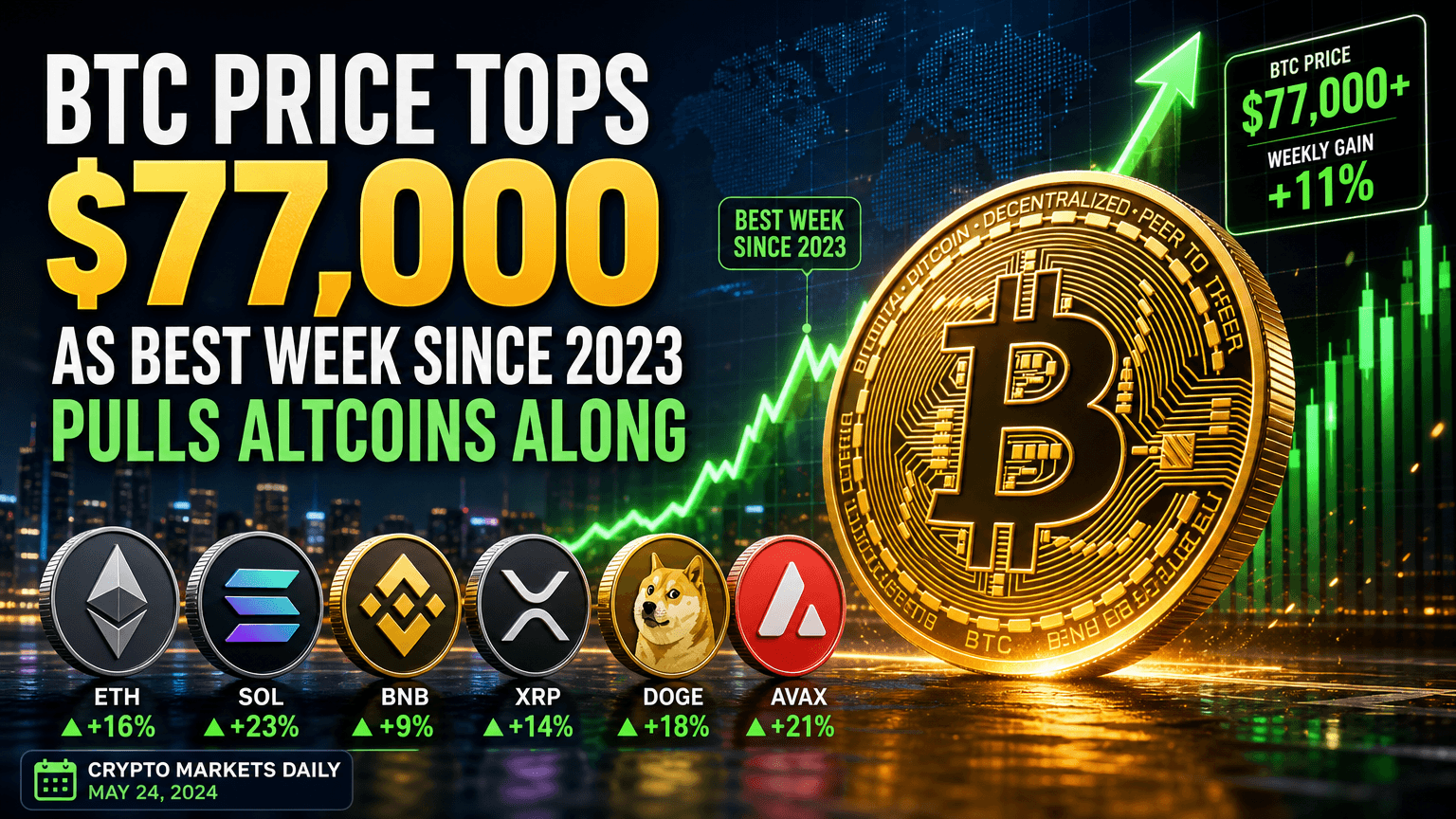
BTC price tops $77,000 as best week since 2023 pulls altcoins along: Crypto Markets Daily
Understanding the Current Bitcoin Rally and Derivatives Market Dynamics
The recent movements in the Bitcoin market have attracted significant attention, with derivatives positioning and rising open interest indicating a rebuilding of notional exposure. Additionally, spot demand metrics from CryptoQuant suggest that the current rally has the potential for further gains.
Bitcoin's Recent Price Surge
Bitcoin's price recently reached as high as $79,400, marking an impressive 8.8% increase since midnight UTC. This surge was part of a larger rally that began mid-week, spurred by an announcement from the U.S. Treasury. The cryptocurrency was trading just below $78,000 at the time of writing, showcasing continued strength in the market.
The Role of U.S. Treasury Actions
The U.S. Treasury's bond buyback announcement significantly contributed to Bitcoin's recent gains. The market reacted positively to this development, extending the cryptocurrency's upward momentum from earlier in the week. Over the course of five consecutive days, Bitcoin's price increased by nearly 24%, achieving its strongest weekly performance since March 2023.
Impact on the Derivatives Market
Bitcoin's price increase led to notable activity in the derivatives market. On Wednesday alone, $3.3 billion worth of derivatives positions were liquidated, with an additional $1.25 billion liquidated over the following 24 hours. This level of activity highlights the volatility and risk present in the derivatives market, where positions can rapidly change in response to underlying asset price movements.
Altcoin Market Dynamics
Despite Bitcoin's dominance reaching 59.9%, the Altcoin Season index fell to 33 from 36, indicating that Bitcoin's strength didn't necessarily signal weakness for other cryptocurrencies. For instance, ENA rose by 13% and ZEC by 12.5%, both outpacing Bitcoin's gains, while NEAR and LINK saw increases of around 8%. These movements suggest a healthy diversity within the cryptocurrency market, with some altcoins performing notably well.
Technical Analysis Insights
From a technical analysis perspective, Bitcoin's price surpassed the $76,000 level implied by an inverse head-and-shoulders pattern that began forming since June lows. Traders who capitalized on this breakout have reached their target projections, which could signal the potential for a short-term pullback. Additionally, the relative strength index (RSI) is currently in overbought territory, indicating that the asset may be due for a temporary correction before resuming its upward trajectory.
Conclusion and Future Outlook
In conclusion, Bitcoin's recent surge has been driven by a combination of positive market sentiment, significant announcements from the U.S. Treasury, and dynamic activity in the derivatives market. While the current rally shows promise for further gains, investors should remain vigilant for potential short-term corrections given the current technical indicators. As always, continuous monitoring of market trends and fundamental developments is key to successfully navigating the ever-changing landscape of cryptocurrency trading and investment.
19.08.2026
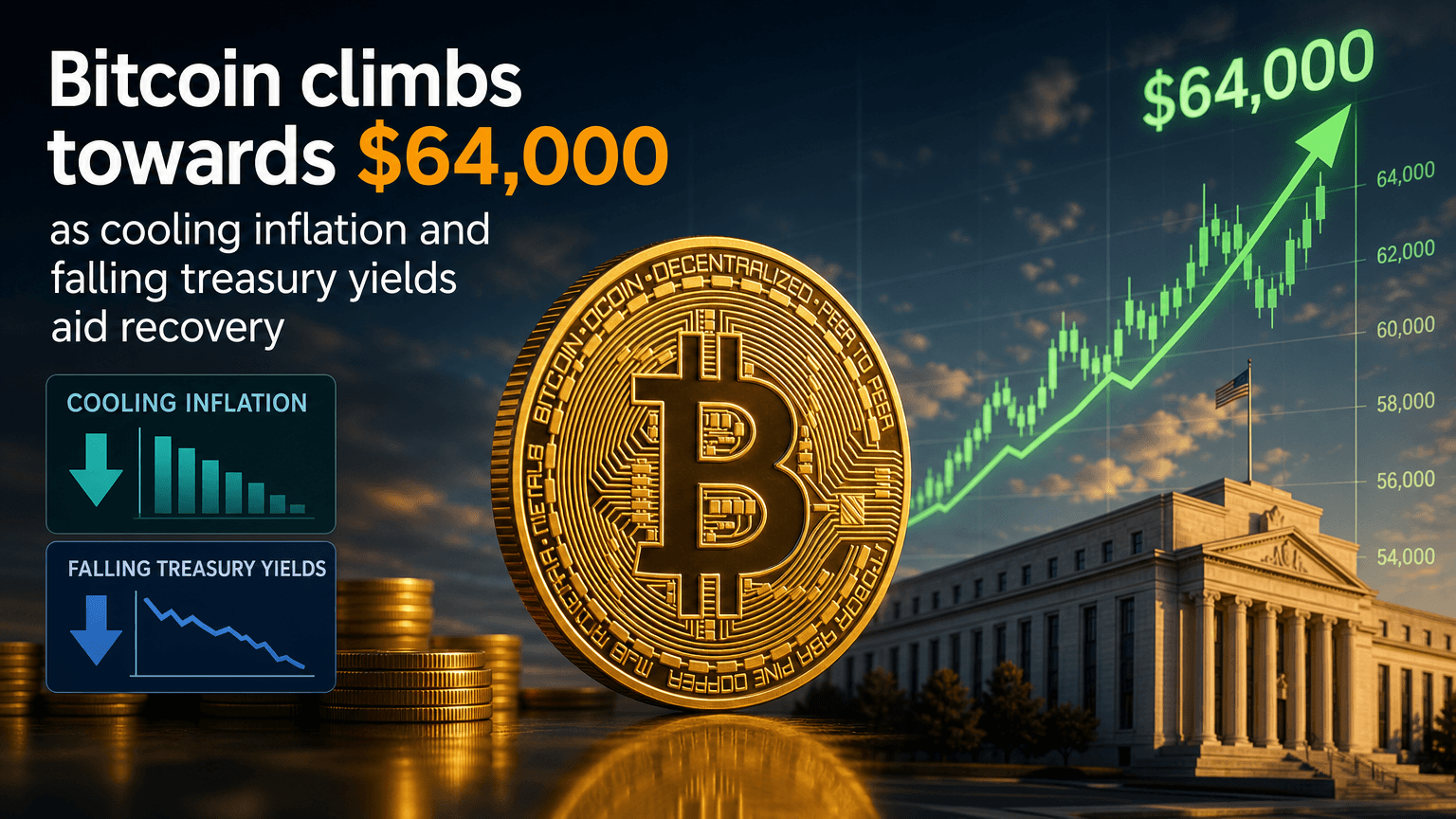
Bitcoin climbs towards $64,000 as cooling inflation and falling treasury yields aid recovery
Bitcoin Straddles the $64,000 Milestone: Analyzing the Market Dynamics
Bitcoin found stability near the $64,000 level as factors such as cooling inflation, decreased Treasury yields, and diminished expectations of further U.S. monetary tightening bolstered the cryptocurrency market. As a result, Ethereum and a selection of altcoins experienced gains, though analysts have voiced caution, indicating that the current rebound remains precarious. The financial community is now looking ahead to the release of FOMC minutes, upcoming inflation data, and labor market indicators, with $64,500 identified as a crucial resistance level for Bitcoin.
Current Market Situation
As of Tuesday, Bitcoin was trading close to the $64,000 threshold, specifically at around $64,246. This price movement has been supported by a combination of reduced U.S. monetary tightening expectations and favorable macroeconomic indicators such as cooling inflation and declining Treasury yields, which in turn cultivated a more supportive liquidity environment for digital assets.
Over the past 24 hours, Bitcoin saw a rise of 1.44% while Ethereum also edged up by 0.43% to trade at approximately $1899. Major altcoins like Solana, Tron, and Hyperliquid showed rallies of up to 1%, whereas BNB, XRP, Dogecoin, and Cardano experienced declines of up to 1.37%.
Market Insight and Investor Sentiment
Avinash Shekhar, Co-Founder & CEO of Pi42, observed that Bitcoin's approach towards the $64,000 mark signifies improving sentiment as the market digests a backdrop of potentially easing U.S. monetary policy, declining economic indicators, and lower Treasury yields, thereby creating more favorable conditions for digital assets.
Riya Sehgal, Research Analyst at Delta Exchange, noted that although the crypto market demonstrated recovery over the past 24 hours, the movement should be interpreted as a rebound rather than a confirmed trend reversal. Bitcoin ascended from the low-$63,000 range to around $64,500, and Ethereum progressed from $1,870 toward $1,915, until facing selling pressures.
Regulatory and Institutional Insights
The market’s focus is now shifting towards imminent U.S. regulatory discussions surrounding crypto industry leadership and the postponed CLARITY Act. Presently, $64,000 serves as a critical support level while $64,500 is considered immediate resistance. Nischal Shetty, Founder of WazirX, highlighted that the easing of U.S. policy expectations coupled with a weaker dollar enhances the crypto market outlook.
Shetty added that Bitcoin's resilience in the face of heightened oil prices and bond yields underscores continued investor demand. However, the recent moderation in institutional ETF activity, along with significant net outflows from U.S. spot Bitcoin funds, depicts a cautious market view.
Future Outlook and Investment Considerations
Prateek Gupta of Mudrex highlighted that Bitcoin's recent breakout from its $63,000 range, ascending past $64,000, is driven by changing macroeconomic conditions that are improving risk appetite. Expectations for a Federal Reserve rate hike in September have diminished, driven by weaker retail sales and indicators of a softer labor market.
According to Vikram Subburaj, CEO of Giottus, despite the price rebound, the on-chain dynamics remain cautious. Contracting spot volumes and transaction throughput signal weakened liquidity and limited market conviction. He advises investors to adopt strategies such as staggered accumulation, limited leverage, and disciplined position sizing until Bitcoin clears the $64,500-$66,000 range with stronger spot and sustained ETF demand.
(Disclaimer: Recommendations, suggestions, views, and opinions expressed by these experts are their own and do not necessarily reflect the views of The Economic Times.)
17.08.2026
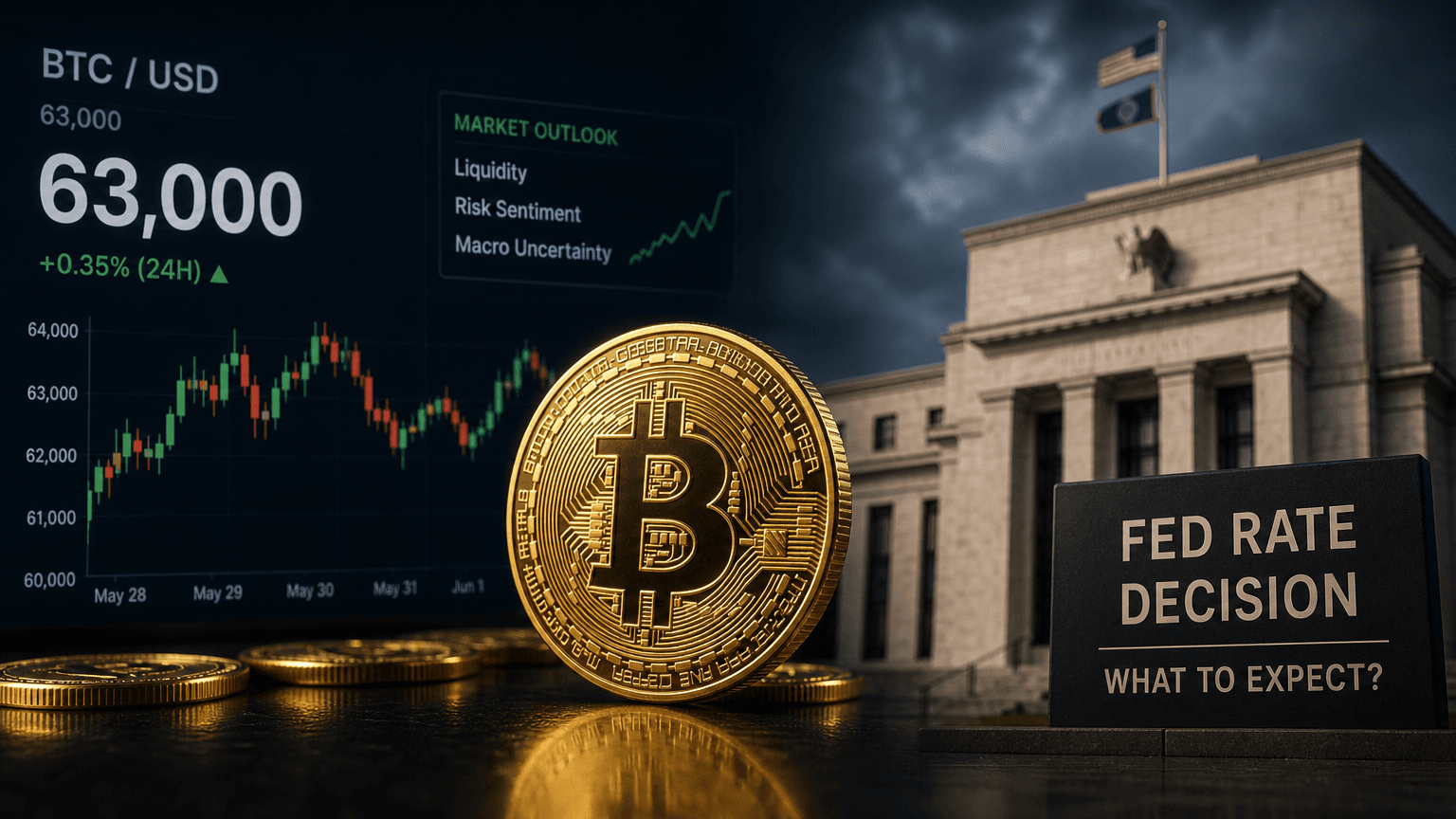
Bitcoin hovers near $63K ahead of Fed rate decision as investors assess liquidity outlook
Bitcoin and the Federal Reserve: A Delicate Balance
As Bitcoin hovered close to the $63,000 mark, market participants found themselves in anticipation of the Federal Reserve's latest guidance on interest rates. The significance of this cannot be understated as the Fed's decisions have far-reaching implications on market liquidity, the strength of the US dollar, and thereby on the appetite for riskier assets like Bitcoin. Currently trading around $63,336, Bitcoin's movements in the near term are likely to be heavily influenced by these macroeconomic cues. Analysts suggest that breaching the $63,300-$64,000 resistance could signal bullish momentum, while support at $62,300 provides a cushion against downward pressure.
Mixed Performance Across Cryptos
In the cryptocurrency market, divergence in performance was noted among major assets. Bitcoin and Ethereum saw minor increases of 0.53% and 0.75% respectively over the past 24 hours. Some altcoins like Tron and Hyperliquid experienced rallies up to 2.81%, buoying market sentiment. Conversely, BNB, XRP, Solana, and Cardano faced declines of up to 1.48%. These mixed performances reflect broader consolidation phases within the market.
ETF Flows and Geopolitical Influences
The broader market dynamics were shaped by several factors including weaker Bitcoin ETF flows and geopolitical tensions, especially in the Middle East. The CoinSwitch Markets Desk emphasized that these elements pose substantial risks and could potentially discourage risk-taking behaviors among investors. $390 million in net outflows from US spot Bitcoin ETFs underscored a shift in institutional sentiment, reversing the $865 million inflows recorded in the previous week.
Market Consolidation and the Road Ahead
Riya Sehgal of Delta Exchange provided insight into the consolidated state of crypto markets. As Bitcoin hovers around $63,200 and Ethereum near $1,895, market participants aim to gauge the impact of macroeconomic factors, like the FOMC minutes release. Such events could sway markets, particularly if monetary policy tightens, applying additional pressure on risk assets.
Experts Weigh In
Comments from industry experts provide additional context. Nischal Shetty, founder of WazirX, pointed to the bearish technical setup for Bitcoin, with moving averages indicating a seller's market. A breach of $64,000 could counter this bearish narrative, easing downside pressures for futures traders. Meanwhile, Vikram Subburaj from Giottus observed low spot trading volumes, hinting at market indecisiveness with neither buyers nor sellers commanding enough influence to drive significant market moves.
The Importance of Patience in Volatile Times
Avinash Shekhar of Pi42 suggested that current market conditions warrant patience over aggressive positioning, highlighting the importance of Bitcoin maintaining levels above $62,300 to ensure momentum. For Ethereum, surpassing the $1,900 to $2,000 price range could demarcate a clearer trajectory.
As the crypto market navigates these uncertain waters, the expert consensus underscores a cautious yet watchful approach, acknowledging that pivotal thresholds in both price levels and regulatory developments will likely dictate the path forward.
(Disclaimer: Recommendations, suggestions, views, and opinions given by the experts are their own. These do not represent the views of The Economic Times.)
14.08.2026
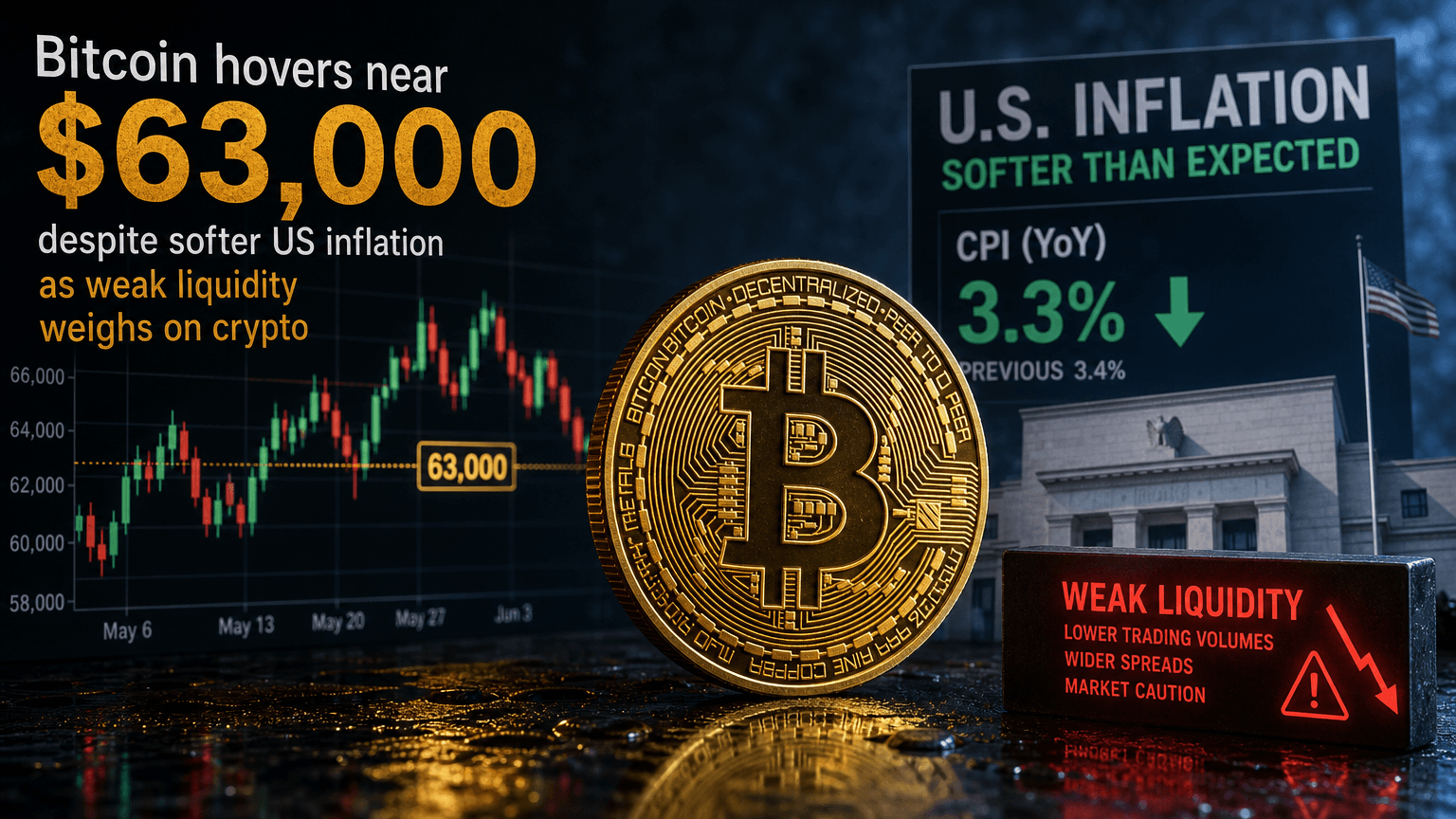
Bitcoin hovers near $63,000 despite softer US inflation as weak liquidity weighs on crypto
Current State of Bitcoin and Major Cryptocurrencies
Bitcoin prices have stabilized near the $63,000 mark amid a backdrop of weak liquidity and subdued institutional demand, counterbalancing recent softer U.S. inflation data. On Friday, Bitcoin was trading at approximately $62,847, reflecting a modest decline of 1.31% over the past 24 hours. Ethereum similarly experienced a downturn, decreasing by 0.70%. Major altcoins such as BNB, XRP, Solana, Tron, Hyperliquid, Dogecoin, and Cardano also witnessed declines, with some coins falling as much as 1.89%.
Market Liquidity and Institutional Sentiment
The lackluster response in the crypto market can be attributed to weaker market liquidity. Prateek Gupta, Head of Business at Mudrex, pointed out that the daily spot Bitcoin volume has plummeted to $1.19 billion—a six-year low—compared to a peak of $14.7 billion in February. This decline is coupled with substantial outflows from Bitcoin ETFs, exceeding $200 million over the past week, suggesting cautious sentiment among institutional investors and limiting short-term upside potential.
Global Crypto Market Capitalization
The global cryptocurrency market capitalization has edged down by 1.29% to $2.16 trillion, according to CoinMarketCap. After the recent market correction, Bitcoin is struggling to maintain support at the $63,000 level, with resistance from bearish forces preventing the cryptocurrency from breaking above $64,000, as noted by CoinDCX Research Team.
Macroeconomic Factors and Market Divergence
Despite a macroeconomic landscape that includes softer U.S. producer inflation, which has alleviated near-term interest rate concerns, the crypto markets remain inherently cautious. Riya Sehgal, a Research Analyst at Delta Exchange, noted the muted response within the crypto space despite these potentially positive developments. Bitcoin continues to trade near $63,500, while Ethereum hovers around $1,890, signaling limited fresh spot demand. ETF flows further contribute to market divergence, with the U.S. spot Bitcoin ETFs recording around $125.4 million in net outflows, while Ethereum ETFs managed a modest net inflow of $6.5 million on August 13.
Institutional Flows and Market Outlook
Vikas Gupta, Country Manager of Bybit, highlighted that institutional flows have shown inconsistency. For instance, U.S. spot Bitcoin ETFs witnessed a $144.6 million outflow on August 10, followed by a mere $7.8 million inflow on August 11. Despite previous consecutive sessions of inflows earlier in August, these flows remain highly reactive to macroeconomic conditions, indicating an inconsistent demand from institutional players.
Technical Analysis and Price Levels
The market outlook, as analyzed by various experts, suggests specific support and resistance levels crucial for price movements. According to Nischal Shetty, Founder of WazirX, futures traders need to watch the downside zone around 0.0134-0.0132, with further support at 0.0130-0.0124. The CoinSwitch Markets Desk observes that Bitcoin's immediate upside targets include reclaiming the $64,000-$64,150 range, with potential subsequent resistance at $64,500 and $65,000 levels. Vikram Subburaj, CEO of Giottus, identifies immediate support at $62,800-$63,000, with resistance around $63,900-$64,000 and a more formidable ceiling at the $65,000-$66,000 range. Avinash Shekhar, Co-Founder & CEO of Pi42, believes the ongoing consolidation of Bitcoin around $63,000 to $64,000, amidst declining spot volumes and ETF outflows, signals restrained market conviction.
Conclusion
In conclusion, Bitcoin and the broader cryptocurrency market face a challenging landscape defined by weak liquidity, inconsistent institutional flows, and a divergent response to macroeconomic factors. The near-term outlook remains cautious as traders and investors navigate through these complex market dynamics. Continuous monitoring of key price levels and institutional fund flows will be critical to understanding future market trajectory and volatility.

12.08.2026
Robinhood adds over 50 tokens to become an 'all-in-one' UK platform - AMBCrypto
Robinhood Expands Cryptocurrency Services to UK Market
Robinhood, a renowned financial services company, is making significant strides by expanding its cryptocurrency services to UK customers. The firm aims to integrate cryptocurrency trading into its well-known app, which already allows users to manage Stocks & Shares ISAs and trade stocks, options, and futures. This move broadens investment opportunities for UK customers, enabling them to access and trade over 50 cryptocurrencies, including popular ones like Hyperliquid [HYPE], Bitcoin [BTC], Ethereum [ETH], and Ripple [XRP]. The expansion utilizes the crypto infrastructure from Bitstamp UK Ltd., which became part of Robinhood following its acquisition in 2025.
The Impact on Cryptocurrency Trading in the UK
The expansion into the UK market stands as a promising development for cryptocurrency trading in the region. Robinhood's unique selling proposition (USP) is the absence of trading fees, a distinguishing feature that could position it as a preferred choice among traders. The company pledges not to levy trading, account maintenance, or custody fees for qualified UK customers. However, it is crucial for investors to recognize that "zero fees" does not completely eliminate costs. Factors such as the buying or selling price, market spread, and other related expenses must still be considered. Robinhood offers a price structure that is more transparent and potentially cost-effective than platforms that frequently rely on broader spreads.
Robinhood's Vision and Unique Offerings
Commenting on the strategic expansion, Jordan Sinclair, the President of Robinhood U.K. Ltd. and GM of Bitstamp UK Ltd., stated, "A new wave of UK investors sees digital assets as an important part of a diversified portfolio. With today's launch, we're taking another major step toward becoming the all-in-one investment platform for the UK." To enrich the trading experience, Robinhood is also introducing Cortex Digests for Crypto, an AI-driven tool. This innovative feature employs technical indicators, market data, and up-to-date news to offer straightforward explanations for cryptocurrency price movements, providing market context rather than predicting future prices.
Robinhood's Comprehensive Crypto Strategy
Robinhood's expansion aligns with its overarching crypto strategy, which encompasses the launch of its Layer 2 blockchain, Robinhood Chain, developed on Arbitrum. Since its worldwide go-live on July 1st, the blockchain network has reportedly facilitated over $18 billion in DEX trading volume and amassed over $840 million in total value locked (TVL). This strategic growth serves as a testament to Robinhood's commitment to advancing its cryptocurrency offerings despite a noted decline in crypto revenue. In Q2, the company recorded approximately $100 million from cryptocurrency transactions, marking a 38% reduction from the previous year. This underscores the importance of strategic diversifications and new offerings in sustaining market presence.
Navigating Regulatory Landscapes
Alongside its market expansion, Robinhood is adapting to regulatory environments, reflected in its registration with the Financial Conduct Authority (FCA) on July 31st. This registration permits the provision of qualified crypto services under the current anti-money laundering framework, giving Robinhood a preparatory advantage before the introduction of the UK’s new crypto regime in October 2027. Globally, regulatory shifts are renascent, as seen in Australia, where tighter controls over cryptocurrency ATMs are being enforced. AUSTRAC, Australia’s financial intelligence agency, recently suspended Cryptolink's Bitcoin ATM operations for three months due to ongoing compliance issues, highlighting the dynamic regulatory landscape crypto organizations must navigate.
10.08.2026
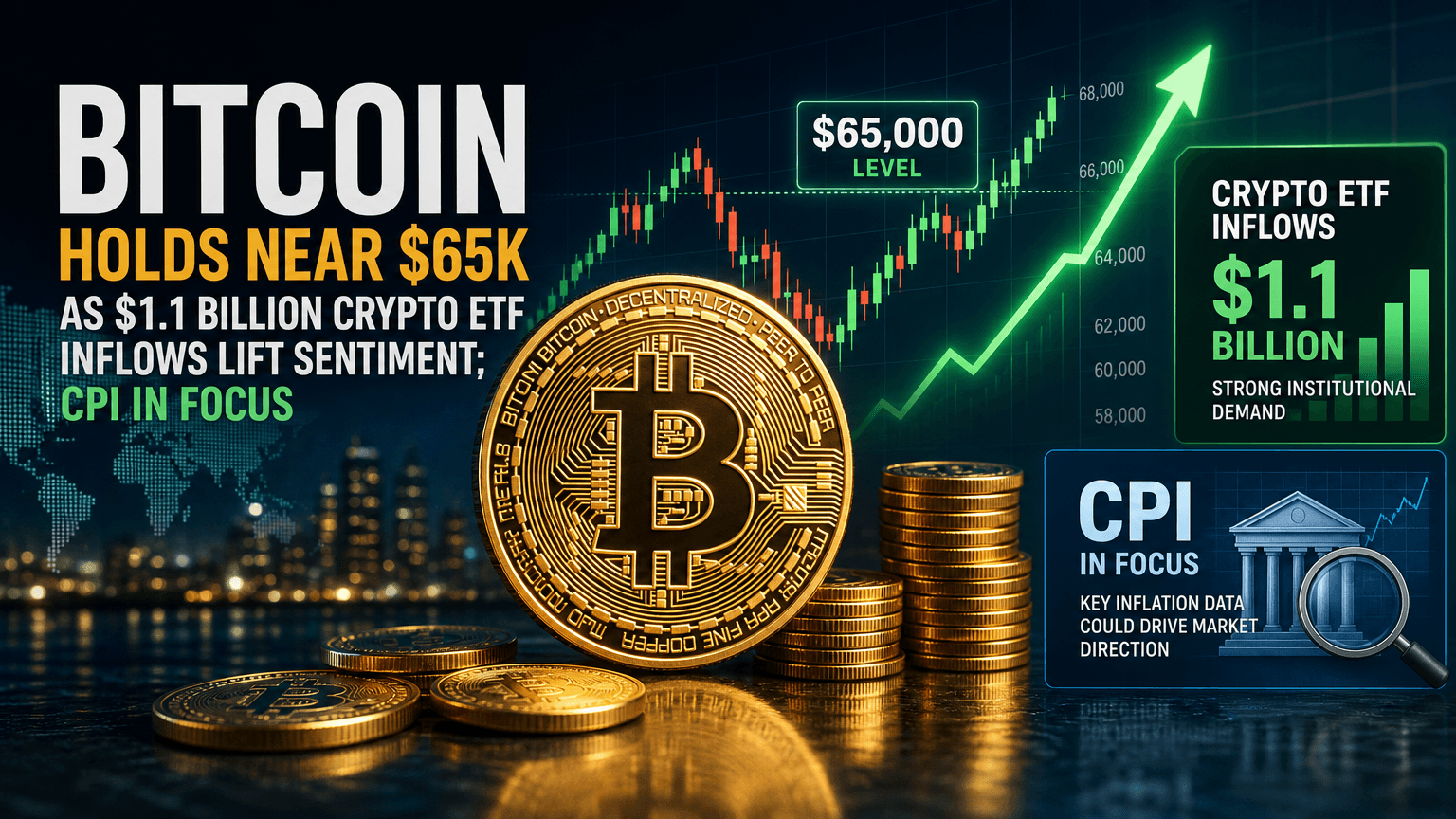
Bitcoin holds near $65K as $1.1 billion crypto ETF inflows lift sentiment; CPI in focus
Market Overview: A Mixed Week for Bitcoin and Cryptocurrencies
The past week has been a rollercoaster for cryptocurrency markets, with Bitcoin hovering around the $65,000 mark as it weathered a turbulent period. Strengthening its position near this psychological benchmark, Bitcoin achieved a notable milestone with spot Bitcoin and Ether ETFs in the US drawing approximately $1.1 billion in net inflows. This surge in interest marks the strongest performance since mid-April, suggesting a cautiously optimistic sentiment in crypto markets. However, all eyes are on the forthcoming US Consumer Price Index (CPI) data, which could potentially steer the market's next move.
Performance Highlights: Key Cryptocurrencies
In the last 24 hours, Bitcoin and Ethereum experienced modest gains of 0.59% and 0.34%, respectively. Among other major altcoins, BNB, XRP, Solana, and Tron witnessed rallies of up to 1%. Conversely, Hyperliquid, Dogecoin, and Cardano encountered slight declines, each slipping below 1%. This nuanced performance across the board indicates a market trying to find its ground amidst external macroeconomic influences and internal technical developments.
Crypto Market Dynamics and Key Indicators
The global cryptocurrency market capitalization inched up by 0.35%, reaching approximately $2.22 trillion. The Fear and Greed Index, a popular tool used to gauge market sentiment, improved to 40, indicating a shift from fear to neutral sentiment among market participants. This improvement echoes the positive weekly performance of Bitcoin and Ethereum, which gained 4.66% and 5.09%, respectively. Meanwhile, XRP saw a reduction of 2.79%, standing as an outlier amid otherwise bullish altcoin trends.
Analysts' Perspectives: Key Insights
Akshat Siddhant from Mudrex highlighted Bitcoin's resilience in the face of recent adversities, including a hardware wallet security exploit and a controversial chain split. However, the looming release of the US CPI inflation print on August 12 remains a crucial point of focus. Riya Sehgal from Delta Exchange emphasized the importance of the $64,200-$64,500 demand zone, with resistance pegged at $65,400-$65,600, linking future price movements to upcoming inflation data. A softer inflation print could sustain the rally in cryptocurrencies and precious metals, while any upside surprise could reinvigorate the dollar and Treasury yields, potentially triggering profit-taking.
Market Sentiments and Future Outlook
Experts from CoinSwitch Markets Desk acknowledge Bitcoin's stable position near $65,000, against a backdrop of softer employment statistics in the US. The market outlook appears cautiously constructive, with participants keenly observing stance adjustments by the Federal Reserve, fluctuations in oil prices influenced by Strait of Hormuz negotiations, and advancements in US crypto legislation such as the Clarity Act.
Vikram Subburaj, CEO of Giottus, noted a shift in institutional dynamics, with spot Bitcoin ETFs capturing significant inflows. Nevertheless, he cautioned against interpreting these inflows as a definitive trend reversal, suggesting a recovery from the subdued period observed in early summer. Avinash Shekhar of Pi42 painted the current scenario as one poised for discovery rather than defensive posturing, urging investors to watch for sustainability in Bitcoin's support levels and potential momentum shifts in Ethereum.
Conclusion: Navigating Uncertainty with Caution and Foresight
The cryptocurrency landscape continues to oscillate between volatility and stability, with external economic data playing a pivotal role in shaping its trajectory. As analysts and investors keep a close eye on macroeconomic indicators and geopolitical developments, the evolving dynamics call for a shrewd balance of caution and foresight. Whether the markets tilt towards consolidation or discovery remains contingent on upcoming economic data and regulatory cues, underscoring the significance of strategic patience and informed decision-making in navigating the complex crypto ecosystem.
07.08.2026
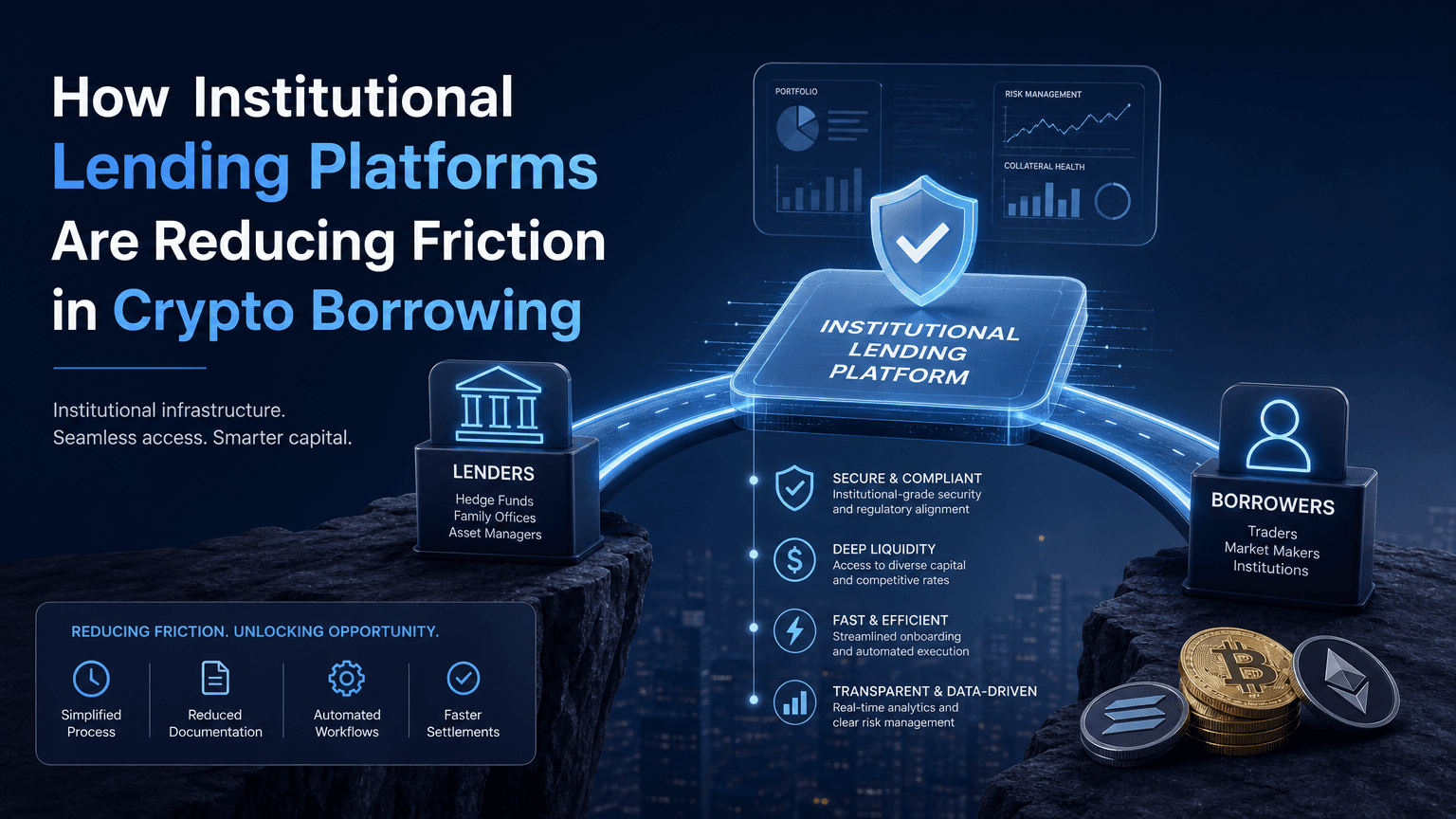
How Institutional Lending Platforms Are Reducing Friction in Crypto Borrowing
The Digital Asset Industry: A New Frontier in Financial Markets
The digital asset industry has evolved far beyond simple cryptocurrency trading. As institutional participation continues to expand, investors are increasingly looking for financial infrastructure that mirrors the efficiency, transparency, and professionalism found in traditional capital markets. The industry's progression signifies a promising horizon for both novice and seasoned investors seeking robust financial solutions.
The Rise of Crypto-Backed Lending
One area experiencing significant development is crypto-backed lending. Modern lending platforms are streamlining what was once a fragmented process, making it easier for borrowers to access liquidity while maintaining exposure to their digital assets. This streamlined approach exemplifies the digital asset industry's shift towards more organized and reliable financial opportunities.
As infrastructure continues to improve, institutional-grade lending is helping remove many of the barriers that previously limited broader adoption. This transformation marks a pivotal shift in how digital assets are utilized within the broader financial ecosystem.
The Evolution of Crypto Lending
Early cryptocurrency lending often involved limited transparency, inconsistent lending standards, and varying custody practices. While the industry offered new financing opportunities, many institutional investors remained cautious due to operational and counterparty risks. The risks were substantial, often steering large players in traditional markets away from embracing these potentially lucrative opportunities.
Today's market looks considerably different. Professional custody providers, improved compliance procedures, standardized collateral management, and more sophisticated risk controls have helped create a lending environment that is better suited for both institutional and high-net-worth borrowers. This maturation has made crypto-backed lending a more practical financing option for a growing range of investors.
Creating a More Efficient Borrowing Experience
Institutional lending platforms have focused on simplifying many aspects of the borrowing process. Rather than navigating multiple intermediaries, borrowers can often complete financing through a more structured workflow that includes collateral evaluation, loan underwriting, custody arrangements, and funding within a single platform.
These operational improvements help reduce delays while providing borrowers with greater visibility into each stage of the lending process. The result is a borrowing experience that more closely resembles traditional secured lending than the fragmented processes that characterized the industry's early years.
Transparency Builds Confidence
One of the most important developments has been the increased emphasis on transparency. Borrowers today expect clearly defined loan terms, transparent interest rates, established loan-to-value guidelines, and well-documented margin call procedures before committing digital assets as collateral.
Institutional platforms increasingly recognize that transparency is not simply a competitive advantage -- it's a requirement for long-term credibility. Clear communication regarding collateral management and risk policies helps borrowers make informed financing decisions while reducing uncertainty throughout the life of the loan.
Technology Is Improving Operational Efficiency
Advancements in digital infrastructure have also helped reduce operational friction. Integrated custody solutions, automated collateral monitoring, secure digital verification, and improved reporting systems have simplified loan administration while strengthening security.
These technological improvements allow both borrowers and lenders to monitor collateral positions more effectively and respond quickly to changing market conditions when necessary. As digital asset markets continue to mature, operational efficiency is becoming just as important as access to capital itself.
Expanding Access to Capital
For many investors, the primary benefit of crypto-backed lending is the ability to access liquidity without immediately liquidating long-term Bitcoin holdings. Financing may be used for business expansion, investment opportunities, real estate purchases, portfolio diversification, or short-term capital needs while allowing borrowers to maintain ownership of their digital assets.
As lending platforms continue improving their infrastructure, this financing model is becoming increasingly accessible to a broader range of borrowers. By doing so, the industry not only democratizes access to capital but also supports the financial goals of a diverse investor base.
The Future of Institutional Crypto Lending
The continued growth of digital asset markets is driving demand for lending platforms that combine professional risk management, operational efficiency, and transparent lending practices. Companies such as Arch Lending are helping support this transition by providing structured financing solutions designed to simplify the borrowing experience while allowing investors to leverage digital assets without immediately selling them.
As institutional participation continues to expand, reducing operational friction will remain a key priority. The lending platforms that deliver secure infrastructure, transparent processes, and efficient execution are likely to play an increasingly important role in the next phase of digital asset finance.
⚠ Note: For information purposes only. Crypto carries risk. Not financial advice!
Related Items: Crypto Borrowing, Institutional Lending Platforms

05.08.2026
Hong Kong Woman Loses $3.3 Million in Fake Crypto App Romance Scam
Introduction to Romance Scams and Cryptocurrency Fraud
In Hong Kong, a significant warning has been issued by the police regarding a concerning rise in romance scams intertwined with fake cryptocurrency trading activities. One alarming case involves a local insurance agent falling victim to a scam, leading to a loss exceeding HK$26 million (about $3.3 million) through a deceptive cryptocurrency trading app. This particular incident has been marked as the most substantial of 25 similar romance-linked investment scams that occurred within a single week in July. In total, these scams accounted for combined losses nearing HK$70 million, approximately $8.9 million.
From Online Romance to Crypto Investment
The saga for the aforementioned victim, a woman in her 50s, commenced when she was introduced to a supposed insurance customer. This introduction eventually connected her to a man who claimed involvement in the car trade. Their relationship started online and soon evolved into a romantic entanglement. The man in question presented himself as a seasoned investor and swayed her to invest in cryptocurrency using an unfamiliar trading application. To legitimize the scam, he further introduced her to an individual posing as the platform manager who would oversee her investments.
Over approximately half a year, the woman parted with HK$4 million in cash, which she handed over to individuals associated with the scheme. Moreover, she transferred nearly HK$22 million into various bank accounts controlled by the scam artists.
The Illusion of Extraordinary Returns
The fraudulent trading app fabricated a scenario where the victim's investments appeared to yield returns in excess of 800%. This inflated and fictitious balance further enticed her to continue her financial contributions, under the illusion of multiplying her wealth. However, when she attempted to withdraw the financial profits she believed she had amassed, the platform obstructed her. Subsequently, the fraudsters severed all communication, leaving her burdened with losses totaling over HK$26 million. Authorities have remained tight-lipped regarding the specifics of which cryptocurrencies were allegedly traded and any efforts to recover the funds or pursue arrests.
Cautionary Advice from the Authorities
Hong Kong police have been proactive in counseling investors to exercise extreme caution when engaging with online contacts who recommend obscure investment platforms. Certain red flags to be mindful of include promises of guaranteed returns, claims of unusually high profits, and requests to transfer money into personal or unrelated accounts. Scammers often use fake investment apps to exhibit inflated balances and non-existent profits while they maintain control over the deposited funds. Victims typically realize the deceit only when they attempt to access substantial funds and face obstacles in withdrawing their purported gains.
To aid in combating such scams, the Hong Kong police operate a tool called Scameter. This search tool enables users to verify suspicious investment websites, payment accounts, phone numbers, email addresses, and online profiles against a repository of reported fraud data. Furthermore, the police urge anyone receiving alerts about high-risk transactions to halt the payment process immediately and get in touch with the Anti-Deception Coordination Centre for assistance.
In conclusion, while the allure of high returns and investment growth can be tempting, it is crucial for investors to remain vigilant and to verify the legitimacy of investment platforms thoroughly. Engaging in informed and cautious investing is the key to safeguarding one's financial assets against scams and deceptive practices prevalent in the digital age.

03.08.2026
Nimrat Kaur and Roshan Mathew team up for survival drama 'Job Trafficking'
Unveiling the Deceptive World of 'Job Trafficking'
The intriguing concoction of entertainment and education comes alive in the new streaming series 'Job Trafficking', featuring celebrated actors Nimrat Kaur and Roshan Mathew. This not-to-miss series, available on Prime Video, delves deeply into the shadows of modern-day online scams, offering a gripping portrayal of survival amidst the depths of deceit and exploitation. As we delve into this series, we explore not only the narrative itself but also the broader implications it holds in the real world, particularly focusing on financial fraud and its devastating impact on victims.
Understanding the Menace of Pig Butchering Scams
Pig butchering, despite the gruesome name, is an insidious form of online scam. Perpetrators engage in this deceitful practice by gradually earning trust and fostering false relationships with their targets, concocting an illusion of friendship or romantic involvement. The ultimate aim is financial drain — luring victims into investing in fake cryptocurrencies or trading platforms. When scam victims attempt to withdraw their investments, they face empty promises, as these platforms are mere facades operated by fraudsters.
This scam parallels the term 'fattening up the pig', creating an illusion of increasing investments and success before the predators strike a devastating blow, leaving the victims financially barren. The series 'Job Trafficking' brings to the forefront the severe consequences of such scams, highlighting their roots often traced back to organised crime networks that thrive on cyber-enabled fraud.
The Dark Underbelly of Job Trafficking
At the heart of this gripping series lies the harsh reality of job trafficking. Young individuals, often enticed by false job opportunities, find themselves ensnared across borders — unaware that they are being groomed to become cogs in these vast scam operations. The narrative brilliantly captures the psychological manipulation and coercion these victims face while humanizing the faceless perpetrators behind the global scamming enterprise. It aims to shed light on the individuals who are coerced into executing these scams, often under duress and involuntary circumstances.
The Intertwined Fates of Three Strangers
'Job Trafficking' is more than just a survival drama; it is an intricate tapestry of intertwined lives and shattered trust. The series introduces us to three central characters: a scammer yearning for escape, a housewife victimized by fraud determined to unveil the truth, and a corporate CEO entangled in a web of deceit. Their struggles and resolutions form the crux of the narrative, underlining themes of trust, betrayal, and redemption in the digital age.
Production and Impact
Produced by Pratik Khanuja, Sameer Chand, Vikesh Bhutani, and Shujaat Saudagar, under Select Media Holdings and Chalkboard Entertainment, 'Job Trafficking' meticulously combines suspenseful storytelling with evocative performances, made accessible on Prime Video. The series does more than entertain; it serves as a poignant reminder of the relentless human will to reclaim dignity and identity amid technological manipulation and moral decay.
As viewers immerse themselves into 'Job Trafficking', they are left pondering the intricacies of trust, deception, and the fragility of human relationships in an increasingly interconnected world. The show encourages introspection on our own vulnerabilities and the digital threats that lurk in the shadows, posing as opportunities for connection and prosperity.

31.07.2026
Digital platforms aggravating human trafficking in Nigeria -- AGF - Diaspora Digital Media (DDM News) - Nigeria Breaking News, Africa and World News and Updates
Challenges Arising from Human Traffickers’ Use of Digital Platforms in Nigeria
The digital age has ushered in unprecedented challenges in the fight against human trafficking, a sentiment echoed by the Attorney-General of the Federation and the Minister of Justice, Lateef Fagbemi. He recently highlighted this growing concern during the 2026 World Day Against Trafficking in Persons, emphasizing the impact of technology on trafficking dynamics in Nigeria.
Shifting Methodologies: The Move from Physical to Digital
Mr. Fagbemi pointed out a critical shift in trafficking methodologies: a transition from traditional, physical approaches to modern, digital platforms. Social media, encrypted communication channels, and fraudulent recruitment websites are increasingly the tools of choice for traffickers. This transition complicates traditional legal and institutional responses, necessitating an evolution in enforcement strategies.
The Lure of False Promises and the Trap of Scam Compounds
Nigerian graduates find themselves particularly vulnerable to traffickers' promises of lucrative overseas jobs in burgeoning fields such as technology, digital marketing, and cryptocurrency trading. These promises, however, often serve as bait, leading victims into scam compounds where their freedoms are severely restricted.
Strengthening Legal Frameworks and International Cooperation
In response to these challenges, Mr. Fagbemi stressed the importance of robust enforcement of existing anti-trafficking and cybercrime laws. The Trafficking in Persons (Prohibition) Enforcement and Administration Act, 2015, forms the backbone of Nigeria's anti-trafficking efforts, while complementary laws such as the Cybercrimes Act target online criminal activities. The Money Laundering (Prevention and Prohibition) Act, 2022, further supports efforts by enabling the tracing and confiscation of trafficking proceeds.
NAPTIP's Role in Combating Trafficking
The National Agency for the Prohibition of Trafficking in Persons (NAPTIP) remains pivotal in combating trafficking. With 839 convictions since its inception and recent successful operations in 2026, NAPTIP demonstrates the efficacy of Nigeria's anti-trafficking framework. Furthermore, the agency's Cyber Response Team actively disrupts trafficking-related scam centers.
Combating Global Networks through Collaboration
Nigeria is committed to international anti-trafficking agreements which enhance collaboration with regional and global partners. This collaboration is crucial, given the extensive networks involved in trafficking people into Southeast Asian scam compounds where billions in illicit revenue are generated.
The Role of Technological and Public Cooperation
Mr. Fagbemi was clear: legislation alone is insufficient. Technology companies, telecommunications providers, and financial institutions must collaborate with law enforcement authorities by sharing intelligence and preserving digital evidence. Public awareness and education also play vital roles in preventing trafficking. Parents, educators, and community leaders are encouraged to educate youths about the dangers lurking behind false online job offers.
Media's Influence in the Anti-Trafficking Narrative
Finally, Mr. Fagbemi called upon the media to amplify the voices of trafficking survivors and sustain public awareness of these evolving methods. Such efforts are crucial to maintaining a vigilant society capable of combating these insidious practices.
The Continuing Battle Against Trafficking
The theme of this year’s event, "Trapped Behind the Scam," underscores the importance of addressing the digital dimensions of human trafficking. While significant strides have been made, the continued commitment of various stakeholders will be essential in adapting to and overcoming these new challenges.

29.07.2026
Flipster Secures VARA Full Operational Exchange License, Advancing Regulated Crypto Services in the UAE
Introduction to Flipster's Milestone Achievement
Flipster, a globally recognized cryptocurrency trading platform, has recently achieved a significant milestone by obtaining a full operational Exchange license (License No. VL/26/07/002) from Dubai's Virtual Assets Regulatory Authority (VARA). This pivotal authorization takes place under the entity Flipster FZE and marks the beginning of Flipster's regulated virtual asset services in the UAE, forming a cornerstone of their strategic global expansion plans.
Implications of the VARA License
The acquisition of this esteemed license empowers Flipster FZE to commence onboarding clients in the United Arab Emirates. This legal approval is not just a gateway to local market entry but serves as a launching pad for potential enlargement into a broader global user demographic. Providing users with trading exposure to both digital and traditional asset classes, Flipster's initial offerings will concentrate on spot trading. This will serve as the foundation for Flipster's regulated product suite, attesting to the platform's diverse and robust trading capabilities.
Understanding VARA's Regulatory Framework
Flipster's successful transition from a status of regulatory readiness and in-principle approval to being fully operational under VARA's framework is a testament to its adherence to regulatory standards. VARA's framework is acknowledged as one of the most exhaustive and globally recognized regulatory setups for digital assets. Operating under this framework equips Flipster with the ability to provide a secure and transparent transacting environment, supported by rigorous standards for custody, governance, and compliance, further enhancing user safety and access to digital assets.
Commitment to Global Financial Standards
This development underscores Flipster's commitment to achieving the highest standards in global finance. The platform is staunch in its belief that regulation is vital to building long-term trust within the trading community. VARA sets a lofty benchmark for balancing the advancement of innovation with the assurance of investor protection. This accomplishment not only solidifies Flipster’s presence in the Middle East but also showcases its dedication to maintaining a high standard of financial governance.
Leadership and Market Entry in the Middle East
Flipster's journey into the Middle Eastern market was initiated in May 2025 with the strategic appointment of Benjamin Grolimund as General Manager of Flipster FZE. The securing of the full operational license symbolizes the progression from merely entering the market to providing full-fledged, regulated services within one of the world's most progressive digital asset ecosystems. This move is not just a geographic expansion but an enhancement of the platform's service offerings to its users.
About Flipster
Founded in 2023, Flipster has swiftly positioned itself as a leading name in cryptocurrency trading. Built by traders for traders, Flipster offers deep liquidity, industry-leading leverage, and comprehensive coverage across global markets, catering to various trading styles and enabling traders to capitalize on market opportunities globally. The platform's unique proposition includes offering access to real-world asset perpetuals in supported jurisdictions, allowing users to trade both digital and traditional assets from a single, well-integrated platform. Additional details can be accessed via their official site flipster.io or by following their updates on X.